

Coromoto: Breakfast is the Most Romantic Meal
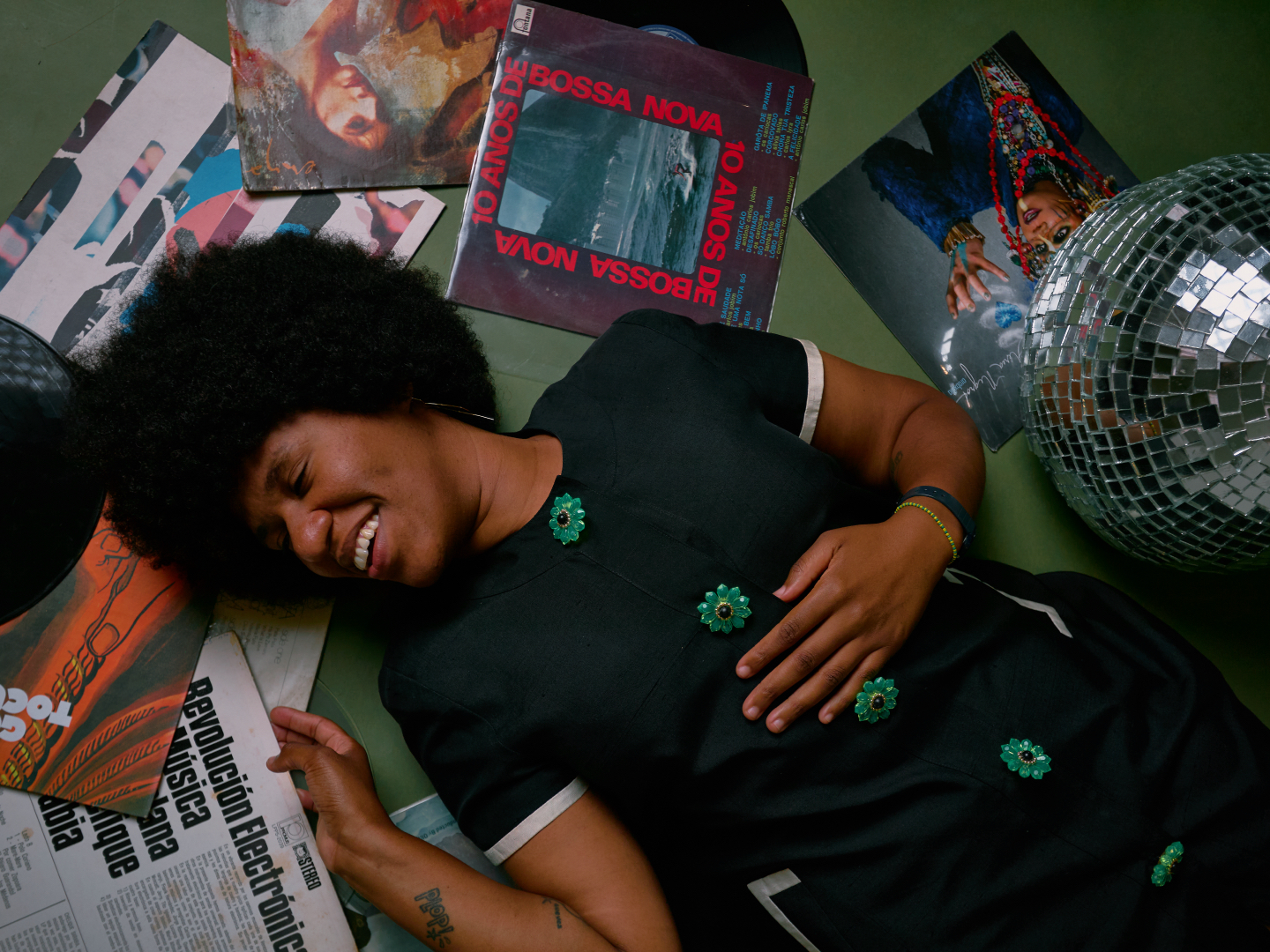
There is a version of Caracas that only exists when the sun goes down and the sanitized filters of digital media are stripped entirely away. Recorded in the first half of 2026, this interview captures a specific, electric window in time: a moment when the capital was dynamically bouncing back from the pandemic, right before the devastating earthquakes of June 24th, 2026, reshaped the landscape once again. It stands as a vital time capsule of a city asserting its cultural survival through sound, sweat, and pure grit.
Enter Coromoto. She is a grounded business mind, an organizer, and a prolific producer who captures the beautiful, chaotic rhythm of Venezuelan street culture. Working alongside key collaborators on projects like the multidisciplinary platform Está Jevi and the production company Clase Media, she operates with a rare, deep perspective on the city's social spectrum, moving effortlessly between the working-class realities of the barrio and the high-end art spaces of the capital.
Yet, in an era where every selector rushes to upload their identity onto the cloud, Coromoto’s sonic work exists entirely in the present tense. You won't find a SoundCloud repository or an algorithmic Spotify page archiving her releases. In a fiercely innovative move that rejects the digital commodification of club culture, her art is intentionally ephemeral. To experience her curation, you cannot simply click a link; you have to physically step into the venue and move to her selections in real time. Even if you don't know how to dance salsa, the sheer friction and momentum of the rhythm just get you.
Sharing her story with The DJ Cookbook, Coromoto revealed a side of herself that goes beyond the noise of the city. In person, she is quiet, pensive, and deeply tender, creating a warm presence that grounds the conversation as she reflects on growing up obsessed with the radio and stepping into her very first underground party in downtown Caracas. That night, she was caught between classic salsa blasting at full volume and changa tuki, the high-energy fusion of electronic beats and street style born straight from the local barrios.
She opens up about using her social media to show the raw, human reality of everyday life in Venezuela, skipping the hyper-polished look most people post online. She also breaks down her take on the local scene, from the vinyl collectors she respects to the global impact of Raptor House. Through it all, she makes it clear why salsa remains the real backbone of her sets, bringing the exact energy and memory of her neighborhood straight to the center of the dance floor.
Q: What were the constant flavors at your family table? Is there a specific dish that defines your childhood? In other words, what did you grow up eating? What did your mom or your grandmother cook?
A: My family is from Barlovento, and Barlovento has some distinct flavors. In fact, my family and I come from a modest, working-class background. They dedicated themselves to being ladies who went to houses to cook and clean. That is highly valuable work that perhaps isn't given the recognition it deserves, but well, they dedicated themselves to that for many years; they also worked in restaurants later on. But my grandmother, specifically, was like the housekeeper for the family of a renowned Venezuelan photographer named Iván Busnego, who was a sports photographer and worked for the Meridiano sports newspaper. In any case, my grandmother devoted her entire life to cooking for his family. Both my mother and my aunts took up cooking as a career, working in both Japanese and traditional Venezuelan restaurants. The food at home was very criolla (traditional/local) cuisine. I grew up eating cafunga, which is this traditional dessert from Barlovento.
We also ate a lot of black beans, arepas, and rice. It was like pabellón criollo, you know? Like, it was that classic Caracas food but with a unique seasoning because of that whole matter of the aliños (seasoning base), the bell pepper, the chili pepper, the cumin, the onion, and the garlic. The cilantro, the green onion... Ultimately, despite our modest roots, we never lost our love for great food and that incredible Venezuelan cooking tradition.
Q: What is cafunga?
A: To understand the food culture of Barlovento, you have to look at its Afro-descendant roots, and cafunga is the perfect example. It's a traditional roll made of ripe banana, shredded coconut, and papelón, wrapped in banana leaves and slow-cooked over coals or baked.
I used to like it a lot when I was younger; not so much anymore. Plus, I haven't been to Barlovento in many years; it's like I'm also very much a city woman, you know? From the city.
It feels like I've lost a bit of that connection to my roots. Even though I still maintain them by wearing my hair in an afro and embracing my African descent, I just don't constantly visit the lands where my parents were born.
Q: Were you born in Barlovento?
A: No, I was born here in Caracas.
Q: Are you passionate about cooking? What do you love making in the kitchen?
A: I really enjoy cooking and do it often. Right now, I live with a roommate, but we handle our meals completely separately. Cooking is something I learned early because my mom worked long hours and left my sisters, cousins, and me on our own for extended periods. We had to grow up quickly and take on adult chores. We learned to cook, take care of one another, run errands, and maintain the household while our mothers and grandmothers were away working.
I learned to cook at a very early age, and I absolutely love it. I can make just about anything. For major traditional dishes like pasticho or asado negro (Venezuelan caramelized roast beef), I can do it as long as I have the Scanone cookbook nearby for reference. But day-to-day, I really know my way around the kitchen. Rice with chicken is my absolute favorite to make, and I love preparing legumes like black beans, lentils, and split peas and comforting soups.
Lately, my daily meals look a bit different because I've been focusing on my diet. I mostly stick to grilled chicken, meats, pork chops, and eggs in the morning. I pair those with things like casabe, Guayanés cheese, and avocado, and that's usually my routine.
Q: What did you eat today?
A: Today I ate scrambled eggs with cheese and chicken breast.
Q: Was that your breakfast, your brunch?
A: No, it's my breakfast.
Q: What is your favorite meal of the day and why?
A: Breakfast is my absolute favorite meal because it feels so romantic. It’s the first thing you taste, the very first food of the day—almost like a meal for the gods that gives you the energy to step out into the world. I think there is a unique kind of devotion we can give to breakfast time. For me, it's the most delicious and beautiful ritual. I almost never leave the house without it; I always make time for breakfast, because otherwise, I am in a terrible mood.
Q: What region of Venezuela has your favorite cuisine?
A: I think I find Llanera (plains region) food tasty. There is a restaurant here in Caracas called Maíz, run by chef Daniel Torrealba, El Llanero. He’s a brilliant chef, and I always go there, and it's Llanera food.
Q: What is llanera food?
A: A lot of meat, maíz pilado (pounded corn) arepa, and he also includes fish... I mean, it's very delicious. But most of all, it's like based on meats and stuff.
I think Venezuelan food is very picturesque; honestly, it has many colors, and it doesn't hold back. So because of that, the flavor is very rich. Everyone who comes to Venezuela loves eating Venezuelan food because even with an arepa, when you see the arepa fillings, there is such a variety of colors in the fillings that you say, "Wow." There's cheese, there's ham, there's avocado, there's reina pepiada, which has a distinct color; there are stews if you want shrimp, chicken, or shredded beef—everything has color.
And the seasonings too. I think Venezuela's food is very distinctive and has a ton of flavor. It's rare when you find a Venezuelan dish that has no flavor; you say, "Those people don't know how to cook." So I think we are very show-offish perhaps, and we are very confident in our kitchen, our food, and our cuisine. We are characterized by having great dishes, great food, and great seasoning.
Q: Do you think that has to do with the mix of cultures within Venezuela?
A: Absolutely. Migrants must have left their mark on us, passing down traditions that we embraced and made our own. While I still need to read up on the history of Venezuelan gastronomy to know the exact details, I definitely think that cultural blend plays a huge role.
Q: What is your favorite fast food?
A: Um, the empanada. Does that count as fast food?
Q: Yes!
A: The Venezuelan empanada. It could also be fried chicken. I like it; I love it.
Well, you know that the best empanada right now is at a spot called La Margariteña, located here in Altamira. They are amazing; honestly, they are Margarita-style empanadas. But before, I used to like Carupanera a lot, but Carupanera has a particular issue where they are very greasy, honestly. Like they don't drain the empanada; instead, they just—I mean, the way they hand it over made me feel like it lost its quality. It seemed crazy to me. I'm not paying $5 for an empanada just for it to be an empanada that looks like they took the oil out and poured it into the bag, you know? I'm not down for that.
But La Margariteña took care of all those details and delivers an empanada that might be very aesthetic, perhaps, but is rich and delicious. And it's what the public wants, you know? In the end, you are paying—they are a bit expensive because they are $7, but you are paying $7 for an empanada that is about this big, and it tastes the way you want it to taste; it tastes rich and savory, and it doesn't leave you with that feeling like you want to throw up from the mountain of grease you just put inside yourself. So I believe you have to take great care of the details regarding gastronomy and the food being offered.
But if we go to another place where there can be delicious empanadas, it is at Las Lavadoras, in San Agustín. They sell delicious empanadas there, with very thin dough, sweet, and a savory stew; they are homemade, and it’s crazy how good they are. I mean, it makes me remember the empanadas from the school cafeteria, the ones you just can't say no to.
Q: Do you listen to music when you are cooking?
A: Yes, we always put music on at home because we have turntables and we have many vinyl records, and all day long we are listening to music.
Q: What kind of music do you listen to first thing in the morning?
A: We have a lot of salsa, a lot of guaguancó, a lot of Latin music. I also have to mention other genres, like pop, punk, rock, a little bit of rock, and electronic; I like electronic music a lot, but right now I am super into Caribbean music.
Q: Which part of the cooking process brings you the greatest satisfaction? The search for fresh ingredients at the market, the rhythmic precision of chopping or seasoning, or the final act of fire and heat?
A: I love the whole ritual of going to the market. I enjoy shopping, searching through the stalls, and hand-picking my produce. Choosing exactly what I'm going to eat, from the vegetables to the meat, is part of the joy, and so is the cooking process itself, where all the small details matter. It is a beautiful mix of everything. In the end, that process is where the true seasoning and magic of cooking come alive. After all, if you don't know how to cook, a mountain of spices won't save you. I have eaten meals packed with a ton of ingredients that still somehow taste completely bland. You find yourself saying, 'This has no flavor, it has no soul,' and yet the cook will say, 'But I threw a bouillon cube in it!'
Q: How would you describe your personal food philosophy? Are you someone who experiments with everything? Do you follow a specific culinary path?
A: Yes, I am one to experiment, but not overly daring either. There are people who are more daring and do crazy things, but I am like a classic-experimental type.
Q: Do you eat everything?
A: Yes, yes, I eat everything. Right now I'm cutting down on carbohydrates.
Q: The Venezuelan table has had to transform and resist in recent years, right? In the face of the challenges of scarcity and economic changes. How has your own relationship with food and cooking evolved due to that dark period that is being lived?
A: Well, just this morning I was telling my partner that it was like—I wished I had someone who would cook for me, and then I said no, I don't want to have someone who cooks for me; I want to have the ability to open the fridge and have a variety to choose from.
So I think we are unconsciously or consciously understanding our pockets and our income, adjusting to a specific diet, meaning eggs, cheese, chicken, and meat. We don't get very creative unless you have a lot of money. Those who have a lot of money can get more creative with food.
My dietary regime has changed quite a bit, also by my own choice. I stopped eating things that aren't good for my body. It's a matter of nutrition, of good nutrition, but it is also limited by the Venezuelan economic situation, for sure.
Ultimately, I am grateful to have lived through those difficult economic moments because they completely changed how we value food. It teaches you never to waste anything and to deeply appreciate the plate of food sitting on your table. The crisis forced us to value who we are and what we eat, which is incredibly important. Today, I think everyone across every social class holds a deep respect for food and has become highly intentional about exactly what they buy.
Q: And I have noticed that despite the situation, there is an emerging culinary scene everywhere.
A: Everyone is hustling to figure out what to do. It is incredible that despite the crisis in Venezuela, hundreds of new restaurants can open up over a relatively short period of time.
Q: Let's talk about Barlovento; it plays an important role within Venezuelan music too.
A: What I can say is that Barlovento has its own sounds, and I think in recent times that is becoming known or valued more. I'm not saying it wasn't known before, but rather that it was like more confined to Barlovento, perhaps, and that's it, and right now it's like more expansive. There are different, perhaps, promoters, ambassadors, or artists who are taking Afro-Venezuelan roots and identity to different regions of the country and also outside the country, and that is important. And also like that possibility for Venezuelan traditions to be known and respected, right? Because it's not just music, it's also other things that encompass what Barlovento is and what Afro-Venezuelan roots are.
So, I think that is invaluable; someone like Betzayda Machado, there are also people from Un Solo Pueblo who also have that theme of the drum and Afro-Venezuelan roots. Right now there are a lot of people like recognizing their work, La Negra Ugueto, who is also carrying the whole theme of Malembe and Afro roots; Gabriel Pinto, who is a visual artist... I mean, not just from music but also from the arts, from photography, making our roots known—it's really cool.
And specifically regarding Barlovento, which is like that place where everyone wanted to go to the beach but nobody wanted to mix with Black people; everyone wanted to go to Higuerote or to Río Chico to the pool, but like, very few people paid attention to the value and the representation that Barlovento has as an incredibly important state and region of the country.
Q: And do you think that nowadays people are integrating more, mixing more?
A: Yes, definitely. You can see it in the programming of cultural institutions like Villa Planchart. Right now I am writing a book, some chronicles where I tell how they are no longer seeing that person who sells drums just as someone to throw into the circle the moment they start talking crazy, but rather like they are already respecting the symbolism and what it represents. And the identity of that: at Villa Planchart they book La Negra Ugueto and Betsayda Machado in a concert, in an event, you know? And people go, pay their admission, and show respect; there is a recognition there from the Venezuelan upper classes of these traditions, these sounds, and this work that these artists have.
So it's just that, you know? Betsayda Machado has traveled the world too. And I believe that yes, in Venezuela, Afro-Venezuelan identity is becoming known and respected.
Q: How important was or is music in your family? Did your parents listen to music when you were a child? What did they listen to? What do they remind you of?
A: Yes, very much so. My family is a family that is deeply marked by music. In fact, my uncles collected a huge number of vinyl records. And one was like a pathologically sick music lover. It's also a family that loves to party, that wants to celebrate for any reason. Every birthday, every baby shower, every damn thing, you know? The baptism, the communion, the confession, the abortion, you know? All of that in one.
And that, man, made me listen to a lot of music. We listened to a lot of salsa. I was raised in Catia, and we had a lot of Colombian neighbors, so it was a pretty interesting socio-cultural mix. Because it wasn't just salsa and merengue, it was also vallenato and champeta. And it was also like understanding that those sounds were part of us too because they were people who perhaps are Colombian but mixed with Venezuelans and have children or are descendants of Venezuelans. So it was like, damn, how cool to be able to have that.
When I was younger, I didn't understand it and I rejected it; now I value it a lot. And I recognize it, and I also recognize being able to have that tolerance and respect for other genres, which also represents part of who we are as Latin Americans and how valuable it is and the cultural value it has in Colombia and in the world. So yes, I mean, I grew up listening to a lot of salsa, a lot of merengue, and a lot of vallenato.
Q: Is there any artist or song that immediately reminds you of your childhood?
A: Los Adolescentes. My parents divorced when I was little, and the song “Me Negó” by Los Adolescentes became the soundtrack to that part of my life. It tells a real story written by the band's director and pianist, Porfi Baloa, about being abandoned by his father, who refused to pass down his last name to protect his social status. The track is about a child giving everything to a father who denies him, and it deeply marked the phase of my own dad leaving.
Q: Are you a dancer? What kind of music do you like to dance to?
A: I don’t consider myself a great dancer. In fact, dancing often makes me feel quite self-conscious because I’ve always been very tall and feel like I occupy too much space. I danced more when I was little, but as an adult, it became much harder to just let go. Honestly, I'm completely fine with not dancing most of the time. I genuinely enjoy watching others and feeling the music in a different way. That said, I do dance salsa. It's not that I don't know how to move, and anyone can dance a little salsa, but my true love is electronic music. I absolutely adore it.
Q: Do you remember your first experience in a Caracas venue or club? What was the atmosphere like, and did it immediately make you want to step into the DJ booth?
A: No, stepping into the booth wasn't even on my mind back then. My connection to the scene actually started completely at home, through the radio. I spent years listening to an incredible amount of radio during a very heavy, depressive stage of my youth. I mostly stayed indoors, studying, reading, and diving into the airwaves.
I grew up admiring figures like David Rondón and Iván Losher, along with hosts like Luis Chataing, Luis El Biso, and David Vélez Gómez. Through them, I learned the layout of the Caracas nightlife scene. I knew how the parties worked and who was playing, but because I was young and lived on the completely opposite side of the city, those physical spaces were entirely out of my reach. The musical contributions of those radio hosts became my world, and they shaped everything I knew about music.
Q: What was it actually like when you finally stepped into a physical venue?
A: To be honest, I’ve always loved music far more than the actual concept of being a DJ. When I finally started going out, it was a challenge because I don't naturally like nightclubs. I find them quite overwhelming. I had a complex childhood and faced a lot of bullying, which left me with a deep aversion to large crowds. It took a lot of work in therapy to get to a place where I could comfortably go to parties today.
The very first nightclub I ever went to was called Fight to Fight, located around El Silencio in downtown Caracas. It was a classic, intense tuki spot. I don't mean tuki in a negative way; it was just a raw reflection of contemporary Venezuelan street culture at the time. The venue was packed with crowds listening to salsa at full blast and dancing to changa.
Because I was with my family, I felt safe enough to enjoy the experience, even though the environment felt incredibly intense and unfamiliar. It was a massive shift from the casual daytime matinées we used to go to right after high school. Since I didn't dance, I instinctively positioned myself right next to the speakers, just watching the DJ and observing how the crowd moved. That became my way of existing in that space.
Q: Did something inside you always know you were an artist?
A: Yes, I always felt a restless pull toward both photography and music. I’ve always been inherently linked to art and the world of performance, even when I was just that young girl obsessively listening to the radio.
Looking back, I spent many years searching for myself, trying to discover my strengths and figure out who I was. My creative path actually began with writing. I used to write a lot of poetry, and I even had a collection of my poems published. Eventually, I drifted away from writing because I lost my connection to poetry for a while. I felt overexposed to it, and it began to bore me.
Though I am finally returning to poetry now, back then, closing that chapter allowed me to shift my focus entirely. That is when I began dedicating myself completely to exploring identity through photography and, ultimately, through music.
Q: How did you start out as a DJ, and what was your first real gig like?
A: I learned entirely by doing. I don't consider myself a "super DJ"; I'm still learning the technical side. I see myself more as a selector, focused entirely on the art of reading the crowd. Too many DJs get stuck playing for themselves while the dance floor goes dry. For me, it is about finding that sweet spot where the music connects with everyone.
I started out playing files on a laptop using Virtual DJ at small events organized by a few psychology friends in San Bernardino. I've always pursued whatever I'm passionate about, and though I've paused some projects over the years, I know I can always return to them. Those early, unpolished gigs eventually opened the door to playing at local feminist events, which ultimately paved the way for "Está Jevi."
Q: What exactly is Está Jevi?
A: It is a production company, a creative platform, and a crew. It began right after the pandemic in 2021 as a vision shared by my business partner, sociologists Camila Bonnet (DJ Cannet) and her friend Isha. They wanted to create an empathetic, safe party space centered around femininity and driven by women and crew members who embraced their feminine side.
They brought me in because I was working with the production house Makinacrea in El Hatillo, where I had built a deep network within the Caracas music scene. Together, we conceptualized a multidisciplinary event that merged local fashion startups, art exhibitions, and DJs in a single space.
Our first edition drew an unexpected 150 people. Because Caracas was starving for nightlife post-pandemic, it became an immediate boom. To keep the concept fresh and avoid burnout, we hosted it strictly every three months. It naturally evolved into a vibrant, queer, and prejudice-free space where people dressed uniquely, expressed themselves freely, and connected deeply with art. We originally hosted it in an expropriated venue called "Haciendo Caracas," which we built up from scratch, transforming it into a hub that sparked a new wave of nightlife across the city.
Q: What does the name "Está Jevi" actually mean, and where is the project heading now?
A: The name is a wordplay. It sounds like "esta jevita" (this young woman/girl), but it also translates to "it’s heavy" or "it's cool."
Since our original venue closed, we transitioned so we wouldn't be tied to just one specific party format. Today, Está Jevi is an active event production company and an open platform for whatever creative ideas pass through our heads. We are currently curating vinyl fairs, sound-tracking collaborative nights in different bars across the city, and expanding into listening sessions and live performances.
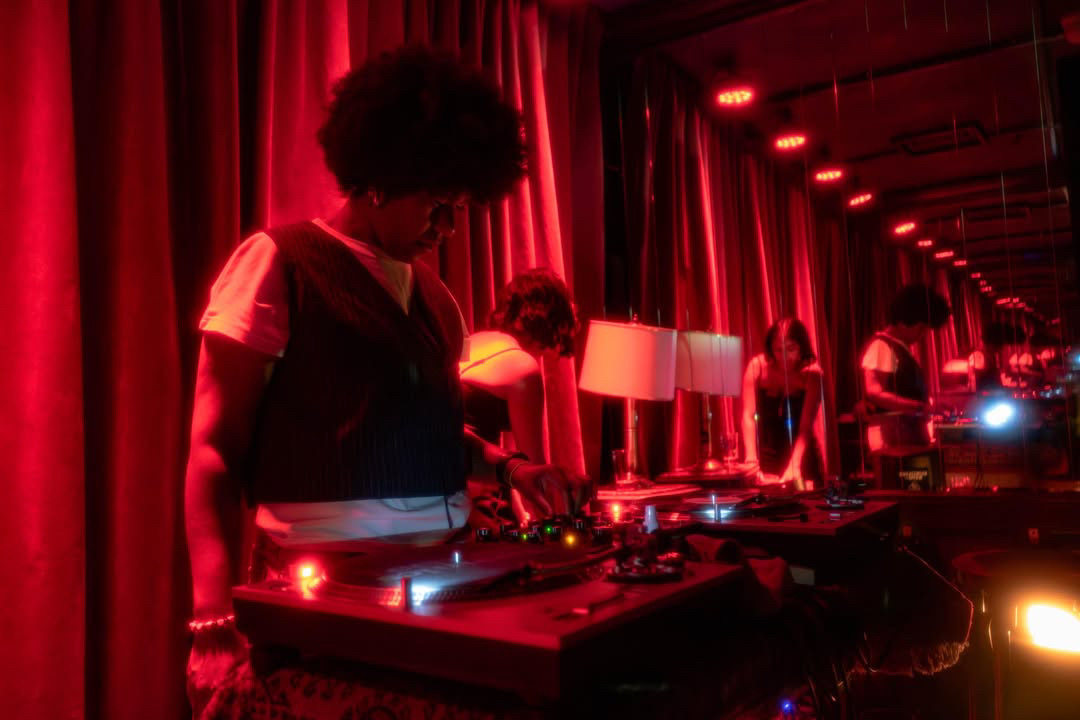
Q: What do you prefer playing on: CDJs or turntables?
A: CDJs. It might sound surprising given how much I love records, but mixing on turntables is incredibly complex and demanding. Playing vinyl is a sacred ritual that requires strict discipline and deep respect for the needles, the records, and the crowd. If you are having a couple of drinks at a party, a vinyl set can get messy very quickly. CDJs are simply far more forgiving, and for my own comfort on a chaotic dance floor, they are my go-to choice.
Q: Are you a vinyl collector yourself? If so, what is your most prized record?
A: Yes, we actively collect. My favorite crate-digging discoveries are my early DJ Babatr records, which are absolute local gems, and a tribute album to Agustín Lara by Toña La Negra.
But my most treasured piece is a record of Santería songs by Celia Cruz with La Sonora Matancera. I deeply admire Celia Cruz, not just for her music but also for her immense historical impact and the unapologetic power of her African descent. She wasn't handed an easy path, but she put her entire soul into her work and triumphed. She was a powerhouse.
Q: You have successfully created your own niche, but has it been difficult to break into the Venezuelan music and nightlife scene?
A: I’ve definitely sweated for it, but I have also been fortunate to align myself with incredibly valuable, creative people. Early on, I made a name for myself simply by having a controversial, unfiltered personality. I used my platform on Facebook, and later Instagram, to speak loudly about taboo topics that others were terrified to touch. I was driven by a sense of pure rebellion. Growing up in a working-class neighborhood, I felt I had nothing to lose and no one to answer to.
As an adult, I am much more responsible with my words, taking care of both my own mental health and that of the people around me. But that early rebellion is what put me on the radar.
My real turning point happened when I met Hattie, the fierce founder of the production company Mákinacrea. Out of nowhere, she loved my energy and asked if I wanted to host a live concert series at the BOD cultural center. I jumped right in without a second thought, treating the stage almost like a stand-up comedy set. That boldness opened the doors to everything that followed.
Q: What do you think of the current Venezuelan music scene?
A: Honestly, I feel the live band scene lives in everlasting nostalgia. People get incredibly excited when acts like La Vida Bohème, Americania, or Los Mesoneros return, singing tracks from 2012 or 2013 as if time stood still. It is a bit bittersweet because we are in a completely different era now. A lot of the international acts that fill venues here are past their prime globally, yet they still pull massive crowds in Caracas because of that collective longing for the past.
From my perspective, the real, breathing vitality of the current scene belongs to the electronic nightlife. The recent rebound of clubs and venues has created a massive shift. Venue owners finally realized that they cannot just run a party off a Spotify playlist or a YouTube stream. They are realizing that DJing is an art form—a respected curation work that drives traffic and demands professional knowledge, whether the artist is an established selector or someone fresh and learning.
Because of this, the movement is incredibly active. DJs and selectors are no longer waiting for invitations; they are actively creating their own alternative parties and claiming their own spaces. In contemporary Venezuela, you quickly learn that if the space doesn't exist, you have to build it yourself, while supporting the rest of the community so everyone can advance together.
Q: Which Venezuelan DJs are you listening to right now? What are their styles?
A: I’m a big fan of Mario Romero. He has been working for years and is incredibly skilled at blending house, tech house, and minimal music. There is also Editex, a talented selector originally from Barquisimeto and now based in Margarita, who plays along a similar wave.
Another standout is Corina Kochen. She recently returned to Venezuela after living in Argentina for years. She plays both digital and vinyl, but watching her mix electronic music on vinyl is truly fierce.
Finally, there is DJ Babatr. He is a true legend of Venezuelan electronic music. His story is deeply inspiring because he fought through classism, racism, and mental health struggles to take his signature sound global, becoming one of the most important Venezuelan DJs in the world today.
Q: You mention DJ Babatr has a very close connection to your own circle. What makes his musical approach so distinct?
A: Beyond being a close friend, I consider Baba an absolute musical genius. His knowledge is incredibly deep. I actually invited him to a party concept I used to run called Rareza, where the challenge was to take electronic DJs completely out of their comfort zones and have them play salsa. Baba didn’t just adapt; he excelled because his musical foundation is so vast. He can transition from a heavy house set to traditional salsa effortlessly.
He is one of the most complete DJs I have ever encountered, possessing a totally singular sound. Today, whenever anyone anywhere in the world mentions Raptor House, they immediately know it means Baba, and they know it means Venezuela.
Q: How do you translate the energy of the streets and the barrio into your musical selections?
A: With electronic music it is a completely different process, but when it comes to salsa, my selections connect directly with the soundscape of my upbringing. I steer away from overly commercial, radio-friendly tracks. I won't play standard pop-salsa unless I am playing a corporate gig in a wealthy neighborhood like Los Chorros.
Instead, I dive into the music of my neighborhood, which I actually learned to love as an adult. When I was younger and a bit pretentious, I dismissed it, but today I love it deeply and know it inside out.
When my business partner Camila and I curate our salsa sets, we dig through countless records, pulling rare gems alongside tracks that trigger collective childhood memories. The local crowd loves the classics, but we try to push past the obvious hits to find the deeper rhythms that shaped our communities.

Q: You mention avoiding commercial sounds. How do you distinguish between genres like salsa brava, salsa baúl, and romantic salsa?
A: Salsa brava is salsa with an edge. It is fast, intense, and made purely for dancing. Sonically, it is incredibly rich because you can hear the raw power and discharge of every single instrument.
Salsa baúl and what people call salsa boloña operate on a different tempo. They are much slower, borrowing elements from tango and cumbia rhythms. It essentially functions as romantic salsa, led by artists like Willie González, Tito Rojas, Eddie Santiago, and Manolo Lezcano.
That said, many of these legendary artists were incredibly versatile and cannot be easily boxed into a single subgenre. Legends like Lalo Rodríguez or Ismael Miranda were hyper-complete musicians. Over their massive discographies, they shifted effortlessly from slow, romantic ballads to fierce salsa brava, guaguancó, and boogaloo.
Q: Do you like merengue?
A: Yes, I definitely play merengue. When I do, I lean into iconic artists like Elvis Crespo, Juan Luis Guerra, and Las Chicas del Can, alongside legendary Venezuelan voices like Liz and Diveana. We also dive deep into the absolute foundations of classic Caracas party music, playing plenty of Billo's Caracas Boys and Los Melódicos. That timeless, festive energy is essential.
Q: You have become a vital window into daily life in Caracas. What drives your choice to showcase the unfiltered reality of Venezuela through your platform, Coromoto?
A: Just today, I was looking through some old files to find a logo concept my friends illustrated for me years ago when I first started, and I stumbled across my earliest work. I used to alter pictures of the neighborhood back then. I wanted to prove that everything in society is measured by aesthetics. If you wrap a narrative in the right visual language, people will buy into it, regardless of where it comes from.
I’ve always felt a deep restlessness to show where I come from and to dismantle the deep-seated prejudice people have against the popular sectors. I wanted to prove that the street has a rightful place in art, fashion, and even within the upper echelons of Venezuelan society. I know I can't single-handedly erase our deep class divides, but my work became a vehicle to show my roots and document how people actually behave.
Human behavior on the street is a walking disaster, and I mean that beautifully. You walk through downtown Caracas and you see people completely unfiltered: scratching themselves, picking their noses, or sharing a kiss over a greasy empanada. It seemed bizarre to me that everyone on social media was ignoring this.
Q: You wanted to capture the absolute truth of everyday life.
A: Exactly. Nobody was showing how humans actually behave when the cameras are off. In the beginning, my photos were rough, but the core concept was always there: showing what gets left out of the stylized, heavily curated feeds. I never saw anything on social media that looked like my reality. It was all pure, sanitized perfection. I wanted to ask, where is the rest of it?
Life has given me the rare opportunity to experience both extremes of our society. I have been completely flat broke in the barrio, and I have lived in luxury estates surrounded by private staff where everything was handled for me. Having stood on both sides, I realized I can exist wherever I want without denying where I came from. Holding onto both realities keeps me grounded, because power and status can easily make you lose your footing.
Q: How do you balance your identity as a DJ and event producer with the constant demands of being a content creator in a city as chaotic as Caracas?
A: Honestly, I don't overthink it. I just give each role the energy it demands in the moment. I still create content because it remains an essential outlet for my creative process. If I didn't express what I feel, I would probably fall into a very dark, depressive headspace.
Right now, my main focus is producing events and playing music. Content creation has shifted into a personal tool to keep my platform alive and maintain my reach. To be blunt, the traditional influencer path in Venezuela has become exhausting. It feels like a performance where you have to pretend to be an eternal teenager, running around doing hyper-polished, superficial bits. I’m an adult; I don't have the patience for that performance anymore. My energy is completely invested in DJing and curation because that is where I feel successful and fulfilled.
Q: What aspect of Venezuelan culture do you feel the rest of the world, and perhaps even Venezuelans themselves, constantly overlook?
A: Our inherent marginality, and I don't use that word in a derogatory way. I mean it as everything that exists just outside the strict boundaries of conventional social etiquette. It is our desire to speak loudly, our spontaneity, and our chaotic energy.
For generations, the traditional Venezuelan has tried to deny this side of our identity, but our collective history has forced us to realize it is exactly who we are. Even an iconic cultural figure like Maite Delgado, with all her elegance and class, possesses that raw, loud, undeniable Venezuelanness at her core. It is inescapable.
Venezuelans constantly try to run away from this raw energy, and you see the clash everywhere. In the rest of the world, art galleries are quiet, minimalist spaces where people sip wine in silence. Here in Caracas? We set up a massive sound system, hand out tequeños, and turn an exhibition into an absolute function. People complain and say a gallery shouldn't look like an Ibiza rave, but this isn't Ibiza, sir. This is Caracas. We overdo everything, and that excess is our essence.
You can live in the most exclusive neighborhood, like La Lagunita, but you cannot strip away that Caribbean, Latin spontaneity. I love our affluent sifrina culture. I've dated within it and I have close friends there, and it is beautiful to see that the moment they get drunk or let their guard down, their real, unfiltered essence comes flying out. That untamed energy is what makes us who we are. Why spend your whole life hiding it?
Q: Coromoto, thank you for being part of The DJ Cookbook.
A: Thank you so much.
Follow Coromoto on Instagram.


