Helene Rickhard: Basking in an Everlasting High
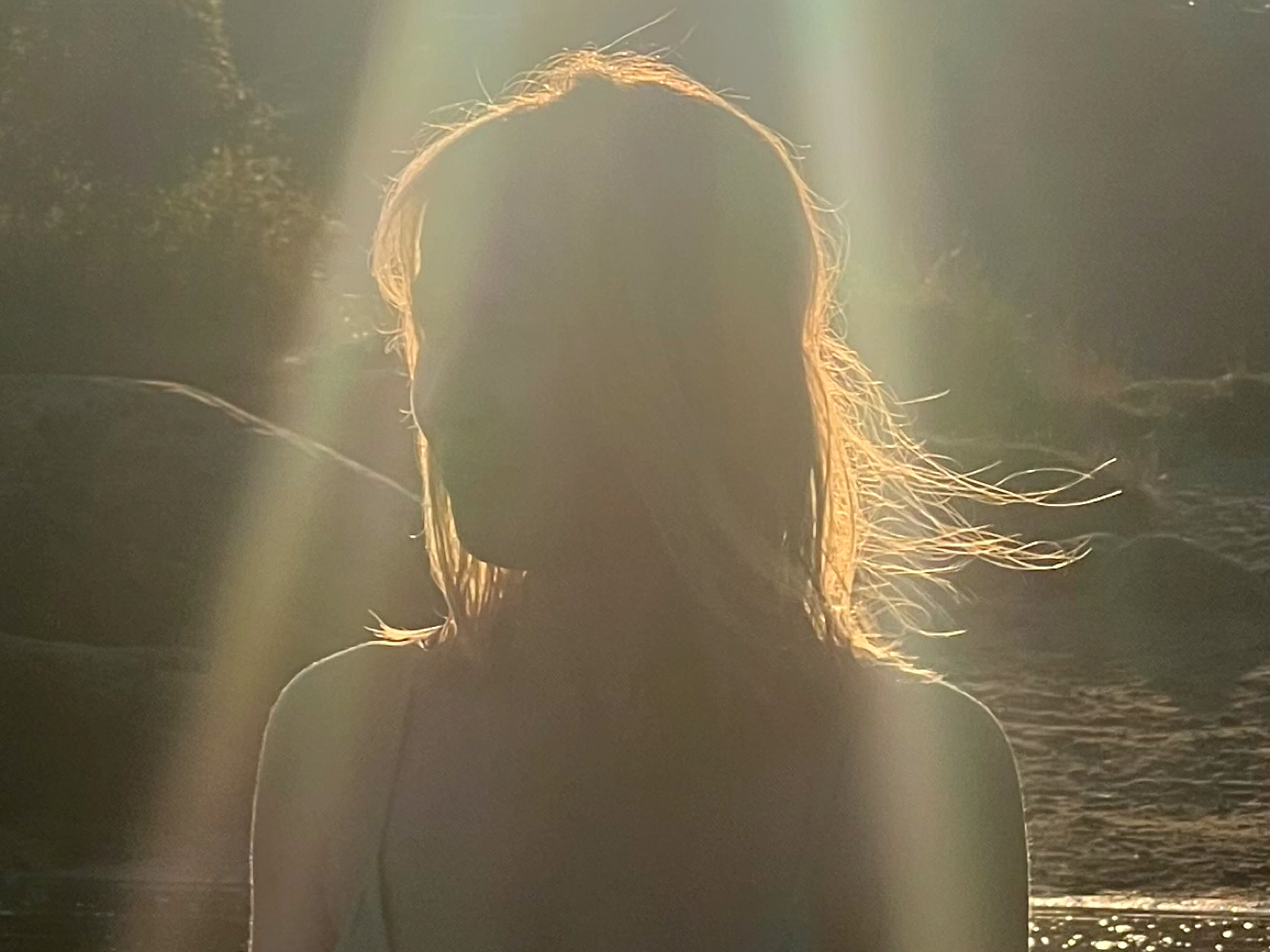
There is a striking juxtaposition at the heart of Helene Rickhard’s latest creative chapter. Look at the artwork for her brilliant new LP, Everlasting High, recently released via Snick Snack Music, and you’ll see the Norwegian DJ and producer standing waist-deep in the serene, golden-hour waters of a coastal lake, looking completely at peace with the world. But ask her about the album title’s origins, and she’ll laughingly trace it back to an accidental, late-night recording session with a friend singing about trepanning, the ancient ritual of drilling holes into the human skull.
It’s this exact mix of cosmic beauty and grounded, unpretentious reality that makes music a total way of life for Helene. Post-pandemic, she traded city chaos for a secluded country cabin, fully embracing what she calls her “foraging genetics", tackling the hunt for wild mushrooms and garden berries with the same primal instinct she’s applied to digging for rare vinyl or tracking down hardware synthesisers. In this exclusive for The DJ Cookbook, we explore the blissed-out, hazy summer frequencies of her new record, her blunt admission that she is absolutely not much of a cook, and the pure creative freedom of living somewhere quiet enough to play her music as loudly as she wants.
Q: What have you eaten today?
A: Today I ate some Wasa knekkebrød with gräddost. I think it’s called 'crispbread' in English, and 'gräddost' is a Swedish cheese. And I also had a cake from a local bakery to celebrate my father's birthday.
Q: What is your favorite meal of the day?
A: I don't really have a favorite meal, but probably supper if I have to choose.
Q: Do you enjoy cooking? If yes, what do you enjoy cooking the most and why?
A: No... I’m really not much of a cook, I must admit. But I think I might have some sort of foraging genetics because I like looking for and finding things, including vinyl, berries, fruit, mushrooms, and everything that involves some searching and harvesting I usually enjoy.
I have a lot of apples and pears in my garden, and I make juice and jam with them in the autumn, which I quite enjoy.
Q: Word is you’ve set up shop in a cabin; aside from the change in scenery, have you noticed your lifestyle or even your diet changing since moving out to the country?
A: For sure, I’m much more outdoors after moving out of the city, and having a big garden is lovely but also quite a lot of work, so it's constantly something to do. I also eat more homegrown vegetables and fruit now.
Q: How is the produce in the area where your cabin is? Do you go to the local markets, or are there chain supermarkets in the area?
A: It seems very good with a lot of local farms that sell their produce here. There are good markets from time to time and also fishing boats coming in every morning selling fresh fish and other seafood. But I do often end up in the supermarket chains out of convenience, though...
Q: Have you discovered any new flavors in your new town? If yes, can you tell us about them?
A: Yes, a few. Arendal, where I live, is a small idyllic town on the south coast of Norway, and there are a lot of restaurants and bakeries here. They have a cake that is very popular called “Munke”. I think they might have it in other places in Norway too, but it’s quite typical here. It might have been originally Danish, I think. A small round cake that tastes best when it is fresh and warm. It is made from pancake batter or doughnut dough.
There is also a favourite night snack here called "Snadderloff." Basically it's half a baguette with lots of cheese and dressing and Chinese cabbage and ketchup on top. Not the healthiest but can be good after a night of partying. The strange thing is that I found out that they have a similar thing on the Polish Baltic coast called 'Zapiekanka', so maybe this is a thing that was imported here.
Q: What is typical Norwegian cuisine like? What does it consist of?
A: Traditional Norwegian cuisine consists of a lot of potatoes, salty and dry meats, porridge and flatbread. Also, a lot of fish, depending on where in the country, could be cod or herring. It's also some typical way of conserving meat and fish, like gravying or using lye that gives the fish a jelly-like consistency. Another typical dish is a type of large ball of salty meat covered with potatoes and served with butter. It has different names in different parts of the country, and where I live, it's called "kompe". I don't really like it so much, but it’s very popular.
Q: What was the atmosphere like at your family dinner table growing up, and what kind of food was usually the centrepiece?
A: It was very nice but quite basic food. My parents didn’t have much money as artists in the early 80s, so there was a lot of inexpensive food, like potatoes, fish and liver.
Q: Is there a special family recipe that you cook?
A: No, not really. My aunt has a few signature cakes, but I haven’t tried to bake them myself yet!
Q: Did your family listen to music? If yes, what did they listen to?
A: Yes, I grew up hearing a lot of classical music. Both at home and going to concerts, at times occasionally some jazz or folk music too, but I never heard any pop or rock music at home until I discovered it myself via TV, radio and records in the early eighties. I still love classical and baroque music, and I also found minimalist composers like Philip Glass and Steve Reich in my parents' record collection.
Q: Did you study an instrument as a child? If yes, which one?
A: I always really wanted to play the drums from an early age but was a bit too shy, and it was very unusual for girls at that time, but I started with the melodica and then the piano and keyboard for some years, and in my late teens I started to play the cello, but I never had the patience to practise enough to be any good at any of them.
Q: Looking back, which artists shaped you during your teens, and who are you drawing inspiration from today?
A: Oh, it’s been a lot of different artists and bands over the years. In my teens Sonic Youth and Kim Gordon and also Björk, Lydia Lunch and Nina Hagen were idols. These days there are so many fantastic artists and music I discover all the time that I find it hard to choose, really.
Q: How and when did you discover electronic music?
A: I think it was via this Fraggle Rock cassette with an instrumental that was inspired by electro and electric boogie that I thought was extremely cool, and also hearing Kraftwerk and Jean-Michel Jarre on the radio sometime in the early 80s.
Q: Do you remember your first real club experience? What was that atmosphere like for you, and were you right there in the middle of the dance floor or more of an observer?
A: I went to a club for the first time in London around '95, and I have been going regularly after that and have always been more or less in the middle of the dance floor!
Q: Can you take us back to the moment you first felt a calling to the decks? When did it click that this was your path?
A: I have collected records and music for a long time, and although I did want to try, I didn’t really see DJing as an option for me, so I didn’t start playing out until sometime around 2015. I started putting mixtapes on SoundCloud and was invited by people to come and play. I decided I had to at least try, and since then I’ve been doing it regularly.
Q: When did you start producing?
A: I started when I was around 16 with a lot of weird experimentation and totally no knowledge. I got some gear, an Akai sampler and an Atari computer, but it was a lot of chaos, and it was hard to understand things before the internet, and the recordings from back then are very lo-fi and strange.
Q: Can you give us an inside peek into your studio setup? Do you have a favorite piece of hardware or software (plugins) that you’re excited about?
A: I often end up using the same stuff a lot, the TR-606, 707 and SH-01, since it's so easy and accessible, and also my old Poly 800. I have a nice Swedish tape delay I got from a friend some years ago, a JMX ET-520, that I use and like a lot, and an 80s analogue Soundtracs 16-8-16 mixer.
At the moment I’m thinking of getting this plugin called Dynassist, an AI plugin for cleaning up vocals and clicks and adjusting automation, etc. It seems nice to save some time on repetitive things like that.
Q: How did your new environment shape the production of Everlasting High? For instance, did you find yourself taking long walks and singing at the top of your lungs to find inspiration?
A: Some of it was originally pieces for a live set. I did it with Thomas Grødal on flutes and vocals at Hærverk in Oslo, and then I finished the tracks and started new ones after I moved out of Oslo when the pandemic started. It's very quiet where I live, and I can play loud and do what I want sonically, so I really enjoy that. I also walk a lot since there's not so much to do here and also very nice and idyllic scenery.
Q: The title Everlasting High suggests a state of being that transcends the moment. Are you describing a peak emotional state, like happiness or joy, or are you tapping into something more metaphysical and spiritual?
A: I think it has a bit of an ambivalent meaning. Reality has a way of imposing itself when you least want it to, and sometimes not wanting to face it at all, maybe. But it's originally a sample from a recording from my friend Marianne's voice from a night we had a few drinks and were singing and playing guitars and made a silly song about the rather dark concept of trepanning, which was apparently an ancient ritual that involved drilling a hole in the cranium for various reasons, which was later picked up by people in the New Age movement in the 60s as a way to obtain a state of a permanent, everlasting high. So it comes from those drunken recordings.
Q: Since Everlasting High feels like such a definitive statement, where do you see your journey taking you next?
A: I don't have that much planned really, but I think I would like to spend as much time here in Arendal and experiment in my studio and maybe release something more on Snicksnack Music later on and also DJ from time to time at Kafe Hærverk, my favorite place in Oslo.
Q: As we wrap up, what is the one thing you hope listeners carry with them after they experience this 'everlasting high' for themselves?
A: I hope they like it!
Q: Helene, thank you so much for being part of The DJ Cookbook!
A: It was fun. Thanks so much for having me!
Follow Helene Rickhard on Instagram.
Listen to Everlasting High.