Lola Villa: Nature is Music
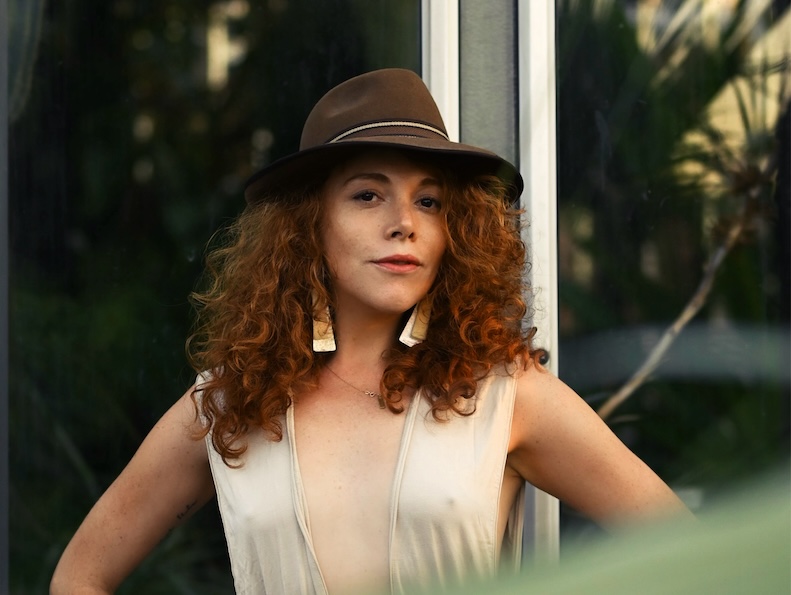
Lola Villa roots herself deeply within every environment she touches, drawing sustenance from the soil before translating its ancient frequencies for the dance floor. A Colombian artist, producer, and DJ moving between the creative anchors of Berlin and Mexico City, her entire life is an exercise in tasting, listening, and cultivating abundance. Her work is a testament to sonic re-enchantment, coaxing the organic pulse of the earth into the mechanical heartbeat of electronic music as a radical act of environmental connection and deep social responsibility.
For Lola, music and food are cut from the same cloth, both serving as essential vehicles to stay grounded in the body. In our latest feature interview, she reveals herself as a brilliant well of global flavors. We trace her journey from a vibrant childhood in Bogotá, alive with the taste of feijoa and guayaba, patacones, and the ceremonial warmth of Andean hot chocolate, to her current rhythm as a minimalist culinary artist and self-professed queen of dressings. Whether she is whipping up Mast-O-Khiar (cucumber yogurt dip) infused with dried rose petals and Palestinian olive oil or exploring her deep love for the complex, masterfully balanced sweet, sour, and umami profiles of Burmese and Surinamese cuisines, her culinary palate is a reflection of her musical identity: layered, historic, and beautifully complex.
Beyond the booth, Lola channels this reverence into active, hyperlocal regeneration. As the head of strategy and communication for DJs for Climate Action, she helps steer a global nonprofit coalition that harnesses the cultural power of electronic music to drive climate solutions. The organization unites international artists, venues, and fans to green the nightlife industry by reducing carbon footprints, hosting decentralized global Earth Night fundraisers, and using specialized nature soundscape toolkits to spark urgent environmental dialogue. This activist drive also fueled her previous EP, Postcards from Mexico, a project that directly funds the planting of urban pocket forests in tree-deprived neighborhoods across Mexico City to supply oxygen, cooler temperatures, and vital shade to local communities.
This profound environmental commitment finds its complete home under the Future Sound of Nature, a multifaceted ecosystem functioning as both a record label and a festival that Lola co-founded with Eli Goldstein of Soul Clap to turn ecological respect into a tangible reality. On the label side, her latest release, Amazonía, stands as a sacred sonic offering that bridges deep house textures with the sacred Manguaré drums and cosmic wisdom of the Bora people of Colombia and Peru, who are rightfully credited as full artistic collaborators with legal financial equity on global platforms. By weaving the field recordings of endangered birds into dance floor textures, Lola invites us to inhabit the thick, sticky air of the rainforest and find the tender intervals where rhythm breathes, returning a portion of the streaming proceeds directly to these indigenous communities who steward the sounds. This holistic vision carries seamlessly onto the ground for the upcoming Future Sound of Nature festival, which migrates its climate-conscious production to a stunning new home in Red Hook, New York, this June 19-21, 2026, bringing a full weekend of dancing and deep local connection to the Hudson Valley.
Read on as we explore a life led by a holy trinity of cilantro, limes, and olive oil, and discover the beautiful synergy of an artist and a dance floor that gives back more than it takes.
Q: Lola, we're curious to know where you're currently based.
A: Hi! I'm between Berlin and Mexico City these days. Always moving, but these two cities are my anchors for now.
Q: We'd love to hear about your meals today! Did you whip something up yourself?
A: I call myself the queen of dressings. If you have proper aderezos (salad dressings), any well-grown vegetable or protein becomes a feast. I get seasonal produce weekly and keep staple ingredients for dressings. I use them on grain bowls, inside spring rolls, spread on tortillas, and spooned onto tacos. Sometimes I toss soba noodles with whatever leftover dressing is in the fridge and build from there: roasted vegetables, toasted seaweed, and strips of wild salmon.
My favorite dressing ingredients are the fats—full-fat coconut milk, tahini, cashew butter, and olive oil—then turmeric, ginger, za'atar, sumac, serrano, ancho, poblano, aleppo, sichuan peppers (white and green!), yuzu, lemon zest, miso, and rice vinegar. I always cook. Cooking and feeding people is one of the ways I stay in my body.
Q: What is your food diet like? What do you eat often, and what do you avoid?
A: I've become pretty minimalist. About 60% are seasonal vegetables, 40% are good oils, and the rest are herbs, spices, and some animal protein. I eat as locally and seasonally as I can. I avoid certain grains, fermented vegetables, gluten, some nightshades, and things that bloat me and pull me out of myself.
When I eat meat or fish, I want it to be the best version of that thing. No white flour, no sugar, no regular milk. Avocados, cilantro, and za'atar—those are basically always on my plate.
Q: Have you discovered or incorporated a recent food into your diet?
A: I've been making my own Iranian Mast-O-Khiar (yogurt and cucumber dip) lately. It's the prettiest dip I know—fresh herbs, dried rose petals, toasted walnuts, and dried cranberries. Mine uses labneh and Palestinian olive oil. Iranian food has this quality of mixing flavors with such generosity and depth, like its history. It's hard to find certain ingredients in Mexico, but whenever I travel, I find Iranian shops and I stock up.
Q: What is a food staple you can't live without?
A: Cilantro, limes, olive oil. The holy trinity.
Q: What is your favorite cuisine and why?
A: Iranian food, deeply. The way they mix flavors—flowers, molasses, and pistachios—is so rich. So layered. It feels like something that has been held for a long time. Burmese food too. A delightful balance that doesn't overpower: divine dressings, gently chopped vegetables, and that tender interplay of sweet, sour, and umami.
And then there’s Surinamese food; man, this one really gets me. Suriname is a wild country, and its cuisine speaks directly to how multifaceted its culture is. It's the result of a difficult history that somehow became abundance: South American fruits and vegetables, the slow-stew knowledge of South Africa, and the fire of Indonesian chilies and sauces. Their hot sauces are no joke. Suriname, to me, is the slave ship that became the shore and escaped its own plantation. The cuisine carries all of that—it's a vibrant, hard-won mix. You taste the whole story.
I also love, love the flavors of Mexico, Japan, and Peru. Always.
Q: What was your childhood diet like, and where are you from?
A: I'm from Colombia, born and raised in Bogotá. I grew up surrounded by fruit: lulo, guayaba, curuba, guanábana, maracuyá, mamey, and feijoa. Feijoa. I only understood how lucky I was much later, when I was living elsewhere and couldn't find any of it.
Patacones with pico de gallo, avocados constantly, and a lot of Lebanese food because we have a big Lebanese community in Colombia—kibbeh and fattoush at home. And hot chocolate. Bogotá is cold, and hot chocolate was almost ceremonial growing up.
People say Colombia has a poor cuisine, and if you're comparing it to Mexico or Peru, sure—a lot of what we eat was built from hardship, food cooked for and by enslaved people to fuel labor on the land. A bandeja paisa is essentially your full daily calorie intake in one sitting. We run on carbs. But there's real beauty in our ingredients, and chefs are now doing extraordinary things with Colombian flavors: goldenberries, lulo, curuba, and criolla potatoes with salt and guac—those potatoes have a specific flavor that belongs only to that altitude and that soil. Yuca with lime, salt, pepper, and guac. And limonada de coco (coconut lemonade). You heard me: coconut and lemonade made a baby, and I will never be the same.
Q: What types of foods remind you of home?
A: Guacamole with cilantro and ají. Patacones. Arepas. Fried fish with lime. And the fruits — if I can get lulo, guayaba, curuba, guanábana, maracuyá, mamey, feijoa—I'm home. No question.
Q: What is your family's favorite recipe that you frequently prepare?
A: Caldo. Broth. Fish, vegetable, or bone—we were drinking broth way before it became a wellness trend. It's one of those things that holds memory in a very specific way. You smell it, and I’m back in the Andes.
Q: What are some of Bogotá's hidden food treasures that only locals know?
A: Two things. The markets: Paloquemao, La Merced, Plaza de Mercado La Perseverancia. Go and try everything: the fruit juices, the fried fish, the ajiaco, which is this insane potato soup made with four different kinds of potatoes. Don't plan it. Just go.
The second is Crepes & Waffles, which is a chain, but hear me out, because their story is special and so is their food: it's entirely run by single mothers, from the managers to the chefs to the waitresses. They use mostly local ingredients, and the kitchen is this beautiful meeting between Colombia and the world. Their juices and ice creams turn our fruits into something transcendent. And their limonada de coco will end you.
Q: Did music and dancing play a role in your family?
A: Always. My mom and her siblings were singers. She brought her guitar to every family gathering, and once the singing wound down, the dancing began. There was always a dance floor, always a dancing uncle. Salsa, merengue, son cubano — always.
Q: What kind of music did your parents listen to?
A: My mom loved the Beatles and the Bee Gees, old Spanish pop and rock, and Colombian boleros. My stepdad was a Dutch hippie with a record collection that felt like a portal: Godspeed You! Black Emperor, Miles Davis, Alice Coltrane, Aphex Twin, and Thievery Corporation. Such a strange and beautiful mix to grow up inside.
Q: What did you grow up listening to? Which artists have influenced you throughout your life?
A: My parents shaped me first — they were such devoted music lovers. I came up on 90s trip-hop: Portishead, Massive Attack, and Godspeed You! Black Emperor. Then classic jazz, a lot of guitar, Afro-Latin, and Caribbean artists—Miles Davis, Carlos Santana, Paco de Lucía, Carlos Vives, Caetano Veloso, Fania, Baden Powell, and Fito Páez. Also Kim Carnes, Sade, The Smiths, The Cure, Stevie Wonder, Juan Gabriel, Astor Piazzolla, Prince, and Brian Eno.
Latin jazz led me to son and salsa: Cal Tjader, Ray Barreto, and Celia Cruz. Disco, boogie, and 80s Japanese city pop have been enormous—Minako Yoshida, Marcos Valle, Yvonne Archer, Blondie, Ornella Vanoni, Taeko Onuki, Mariya Takeuchi, and Nightlife Unlimited.
Film scores too: Ryuichi Sakamoto above all. Jodorowsky; Vangelis (that Blade Runner soundtrack is a whole cosmology); Yumeji's Theme by Shigeru Umebayashi in In the Mood for Love; and Ennio Morricone. Cinema taught me that sound has a physical weight.
Q: How did you discover electronic music?
A: Through Sakamoto I found Yellow Magic Orchestra, which opened the door to Japanese technopop of the late 70s, and then Kraftwerk. But I think Daft Punk was the real shift—Revolution 909 changed how I understood what electronic music could do to a body. Then Phil Jubb's If Wishes Were Horses from 1996, something from Underground Resistance I heard much later. What got me was how close these rhythms felt to faster Afro-Latin rhythms, the same urgency, the same invitation. The dance floor is sacred geometry. That's when it became something I couldn't let go of.
Q: What were you doing before you committed to the booth, and what was the tipping point?
A: I've always worked in creative fields—creative direction, editorial, and brand. I moved to Berlin in 2010 and witnessed what electronic music does to people. The spirituality of the dance floor moved me deeply. Then I moved to Amsterdam and started seeing someone who was a DJ. He showed me the other side—the backstage, the practice, and the architecture of a set. When we ended, I was heartbroken. I took plant medicine to find my way back to myself, and somewhere in that process I reached for the one thing I'd learned from him. I started playing and never looked back.
Q: What was your first DJ setup like, and how many hours a day did you practice?
A: A secondhand Pioneer XDJ-Aero; just the track name and a few pixelated bars showing you how much time was left. I was obsessed. Around three to four hours a day after work, after parties, whenever I could find the time.
Q: How would you describe your sound? What kind of sonic journey do you take your dancefloor on?
A: I'm an '80s child from Colombia with a hippie Dutch stepdad; that's your starting point. House music with 80s synths, disco, warm percussion, and a bit of Berlin and Amsterdam woven through. I started as a downtempo DJ, so sets often begin very ethereal, almost trip-hop, and then build. Since starting Future Sound of Nature with Eli Goldstein, I’ve also incorporated House and deep ecology in my sets. Thematic house and groovy disco connected to nature.
I love long sets where I can get weird and let something unfold slowly. The dance floor as a shared dream you're all having at the same time.
Q: What kind of music do you listen to during your downtime?
A: A lot of ambient lately, ambient jazz, electronica, and always salsa. Cal Tjader is always on rotation at home. Eddie Palmieri, Joe Bataan.
Tour-Maubourg has been on rotation. Shida Shahabi, incredible pianist. Nightmares on Wax, that delicious mix of electronica, jazz, hip-hop, techno, dub, and funk soul. For ambient: Shinobu Nemoto, I've been waking up to their album Silver Storm every morning. Patricia Wolf is an extraordinary sound designer; she uses all those layers and field recordings. Nala Sinephro has been one of my favorite discoveries in years; she's a Caribbean-Belgian composer mixing field recordings with synths and orchestra, like jazz and electronics with the window open so the birds can join. She’s the new version of Alice Coltrane. Yumi Matsutoya, because I'm an 80s child, and I will never apologize for it, ha! Yussef Dayes, pure beauty. And Gabriels feels like walking into a Black church.
Q: You've lived in many countries. How have they influenced you as an artist?
A: I am genuinely the result of everywhere I've been. It shows up in what I listen to, what I make, and how I curate sound. I look at everything I've just said, and I can trace the thread: the places, the people, the kitchens, the dance floors. All of it is in the music somehow.
Q: Your latest releases Amazonía and Postcards from Mexico feel like distinct jouneys. What inspired them?
A: With Amazonía, the vision for Future Sounds of Nature really came into full expression. Born from a partnership with Eli Goldstein of Soul Clap, the label is a space to cultivate community, creative well-being, and a deeper respect for our ecosystems.
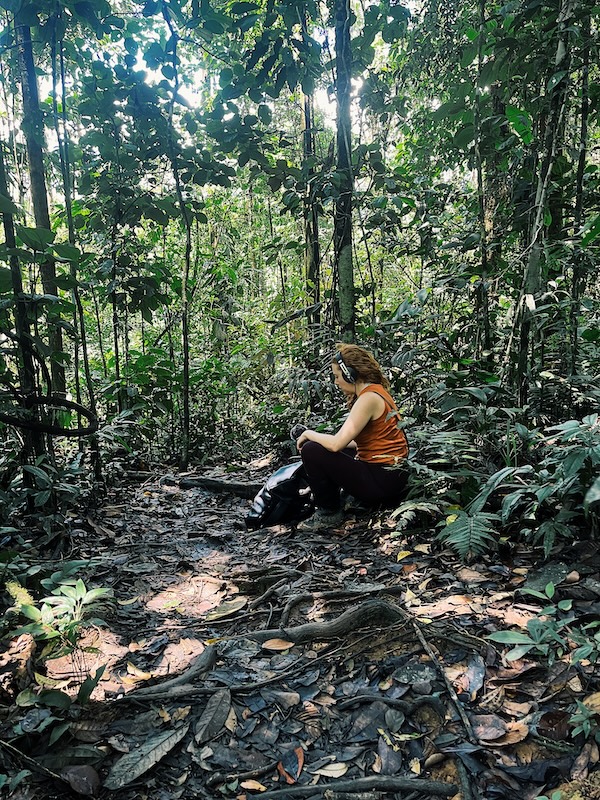
Amazonía is a sonic offering, an ofrenda sonora, a bridge between house music and the sacred Manguaré drums of the Bora people. It came from time I spent immersed in Peru and Colombia, recording endangered birds whose calls I then wove into dance floor textures. It's an invitation to listen with intention, to find what I call the "tender intervals" between beats, where rhythm breathes thick, sticky air and silence carries the wisdom of the rainforest. The project advocates for re-enchantment: a move toward a reciprocal relationship with the land that asks for patience, attention, and imagination.
This ethos flows directly into the second edition of the Future Sounds of Nature festival, taking place in the Hudson Valley from June 19 to 21, 2026, now in a new venue in Red Hook, New York. A full weekend of dancing, local connection, and the commitment to leaving the land and the community a little better than we found it.
Postcards from Mexico came from my time living there and a project I did with Splice, recording the last living river of Mexico City and other sounds from the capital, from forest to urban, from breath to noise.
Q: Who are the musicians on these journeys?
A: Something essential to how I work is finding ways to acknowledge nature and the communities I'm with on the ground, not in the liner notes but as full collaborators. In Amazonía, I worked directly with the Bora people in Colombia and Peru. I learned their cosmology, the way they attune to their environment, and the influence of the ecosystem in their daily life. And I made sure they are registered as artists on streaming platforms and every other medium, owning the music and getting paid for it. I worked with Aida Ruiz Sanchez and Elber Manuel Sanchez.
For Postcards from Mexico, I wanted Mexican artists alongside producers from completely different geographies—a beautiful collision of classical opera, hip-hop, and electronic production.
Timboletti (Germany), Catalina Pereda (Mexico), Jomi Delgado (Mexico), Brooklyn the Kid (USA), Alyzza (USA), Heather Luna (USA), Saraab (Germany/Syria), Johnny Posh (Canada), and Zach Cutler (USA).
Q: A portion of proceeds returns to the communities who stewarded these sounds. Can you tell us more?
A: The nature of these projects was always driven by the samples I recorded—in the Colombian and Peruvian Amazon and in Mexico from its last living river. The idea is to sing back to the land and the communities that sang to me first. Having a social component felt obvious, not strategic. I want to support the communities who protect and care for the land and the land itself. It asks something of us. I want to answer.
For the Mexico album, proceeds go to planting trees in pockets of Mexico City that have no access to green areas. Pocket forests that eventually become their own ecosystems and hardly need water but supply oxygen, cooler temperatures, and shade to people living in those areas.
Q: What is DJs for Climate action, and how did you get involved?
A: DJs for Climate Action is a community and nonprofit at the intersection of climate and electronic music—hyperlocal activism and community-building connected to a global network of knowledge and shared purpose. I was invited into a focus group of DJs from around the world to reimagine the role of artists in the climate movement. That became the future vision, a collective articulation of where our industry could go. I joined the board and now lead strategy and communication.
Q: In celebration of Earth Day, what kind of events did DJs for Climate Action produce?
A: Solar-powered parties, nature and music listening sessions, debates, radio shows, and more parties. The full range, from intimate and contemplative to loud and communal.
Q: Electronic music has become a money-making machine. Is there a desire for a sustainable festival circuit and club scene?
A: I think we can be regenerative and make money. I don't believe those have to be in opposition. When you look at nature, she's abundant. There's enough for everyone. Financial stability and caring for the planet aren't mutually exclusive; they actually need each other to work.
The industry right now benefits a very small number of people enormously. Everyone else has always been at the periphery. But I do believe there are meaningful ways to make art, build a business, and help the planet. We just have to want all three at the same time.
Q: Can you recommend festivals and clubs that have adopted sustainable practices?
A: Germany is genuinely impressive with how they've handled plastic. Fusion is a pinnacle there. Nómade in Chile is a great example. Cozumel Vivo in Mexico, where I performed, has a comprehensive sustainable framework I really respect. And of course, Future Sounds of Nature.
Q: How can an emerging artist build a sustainable career in electronic music?
A: Everyone has to find their own mix: live shows, sound design, education, or something else that keeps you sane and solvent. DJing full-time, on its own, is not sustainable: mentally, spiritually, energetically, and climate-wise. That's just my honest read.
You need multiple roots. And you need at least one thing that feeds you in a way the stage can't.
Q: Lola, thank you so much for taking the time to talk to us!
A: This was such a pleasure. Thank you!
Follow Lola Villa on Instagram.
Listen to Amazonía here.